Worker's Comp Treatment in Abilene
You got hurt at work, you want to get back to full duty, and you need the paperwork to keep up with you while you do it.
What causes most work injuries?
Work injuries are rarely dramatic. Some start with one bad lift or one wet floor, but most build over months of the same movement, the same reach and the same weight, until something that has been quietly complaining finally stops working. Either way the questions are the same. What actually got injured, what will it take to get back to full duty, and who is going to document it properly so the claim does not stall. We accept Worker's Compensation, and we handle all three.
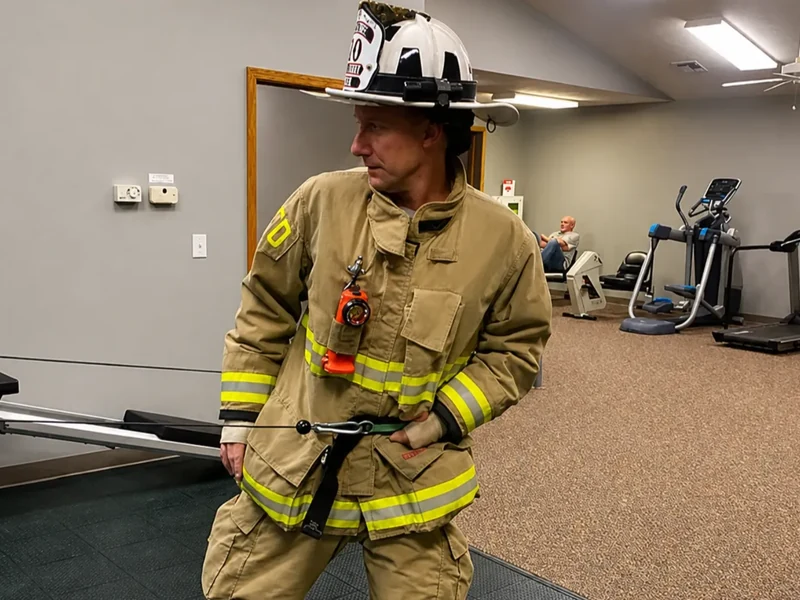
A single repetition of anything at work is harmless. The same repetition all shift, every shift, is a different question entirely. Tissue adapts to load when it gets time to recover and breaks down when it does not, which is how shoulders, elbows, wrists and forearms fail on production lines, in packing, in the trades and at keyboards. The pain usually starts late in the shift and clears overnight, then starts earlier and earlier until it stops leaving at all.
Most reported back injuries at work happen during a lift, and it is rarely the heaviest lift that person did that week. It is the awkward one. A load held away from the body, a reach into the bottom of a bin, a twist while carrying, a box that turned out heavier than it looked. Your back is not fragile, but it is far weaker twisted and bent than braced and upright, and weaker again at the end of a long shift.
Falls at work produce the widest spread of injuries: a wrist broken catching yourself, a knee twisted on a loading dock, a back injured by the sudden save that stopped you going down at all. That last one gets underestimated constantly, because there is no dramatic landing to point at. What matters for your claim is that the mechanism gets documented accurately from the start, and what matters for you is that everything the fall loaded gets examined, not only the part shouting loudest.
Overhead work, kneeling, crouching under a dashboard, leaning into a machine, standing on concrete all day. Holding a position is work even when nothing appears to be moving, and the muscles doing the holding fatigue with no chance to recover while the shift keeps going. The result is neck, shoulder and low back pain that builds through the week and never quite clears over the weekend. How often the position changes usually matters more than which position it is.
Impact drivers, grinders, jackhammers, chainsaws and mowers all transmit vibration into the hand and arm, and grip force combined with vibration is hard on the tendons and nerves of the forearm and wrist. Symptoms show up as deep aching, a grip that gives out, numb fingers, or hands that go cold and pale. It responds to a combination of strengthening, tissue work, changes to grip and tooling, and an honest conversation about how the job is being done.

How physical therapy in Abilene helps.
A work injury has two problems running at the same time. There is the injury, and there is the claim. On the injury side we do exactly what we would do for anyone: examine it properly, find the actual driver, and treat it with hands on work, progressive strengthening and the real demands of your job built into the plan. On the claim side we document objectively. Range of motion in degrees, strength testing, lifting tolerance, and a clear statement of what you can and cannot do at work right now, updated at every re-measurement rather than described in vague language nobody can act on.
That documentation is what keeps things moving. Your employer, your adjuster and the referring physician all need to know where you stand and what you are cleared to do, and we put it in terms they can use. Your return to work plan gets built around your actual job demands rather than a generic template, so if the job means lifting heavy loads from floor to shoulder repeatedly, that is what we train and that is what we test before anyone says you are ready. You work one on one with your therapist, start to finish. Call us at (785) 263-3646 and we will handle the insurance side with you.
What to expect from your recovery.
Evaluation and documentation on day one
Your first visit is a full examination plus the paperwork that goes with it. We measure range of motion, strength and functional tolerance, and we record the mechanism of injury accurately. That baseline goes to your physician and your adjuster, and it is what every later measurement gets compared against.
Treat the injury, train the job
Treatment is hands on work to restore motion, progressive strengthening for what was injured, and conditioning built around the tasks you actually perform. If your job is overhead, we train overhead. If it is lifting off the floor, we train lifting off the floor, loaded gradually until it holds up across a full shift.
Return to work, on the record
Before anyone says you are ready, we test you against your job demands and put the results in writing. Restrictions, modified duty recommendations and full duty clearance all come with objective measurement behind them, so your employer and your adjuster are working from the same picture you are.
Highly recommend! Your needs are heard and you are very well taken care of about this physical therapy.
Pain rarely travels alone.
Back Pain & Sciatica
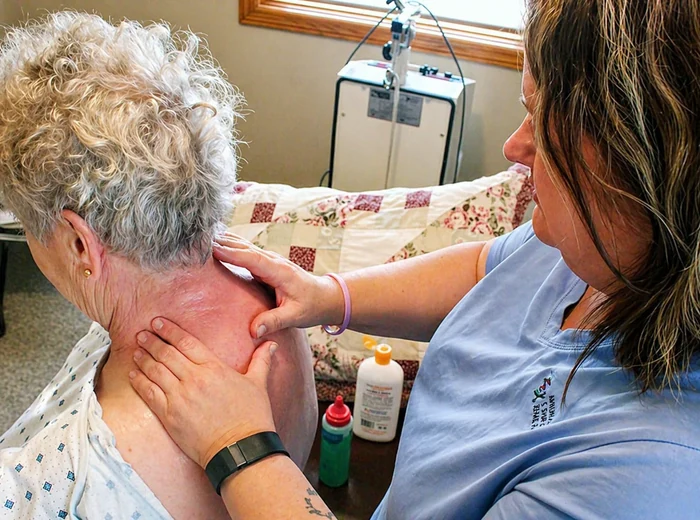
Lifting injuries land in the low back more often than anywhere else. We treat the driver and then rebuild the lift itself.

Chronic Pain
A work injury that never fully settled can turn into persistent pain. Graded loading and measurement, not more rest.

Neck Pain
Overhead work and long shifts at a screen load the neck hard. Mobility, hands on work and strength ease the stiffness.