Dry Needling in Abilene
Precise, evidence-based trigger point release that quiets tight, painful muscle and restores freedom of movement without drugs or manipulation.
What is dry needling?
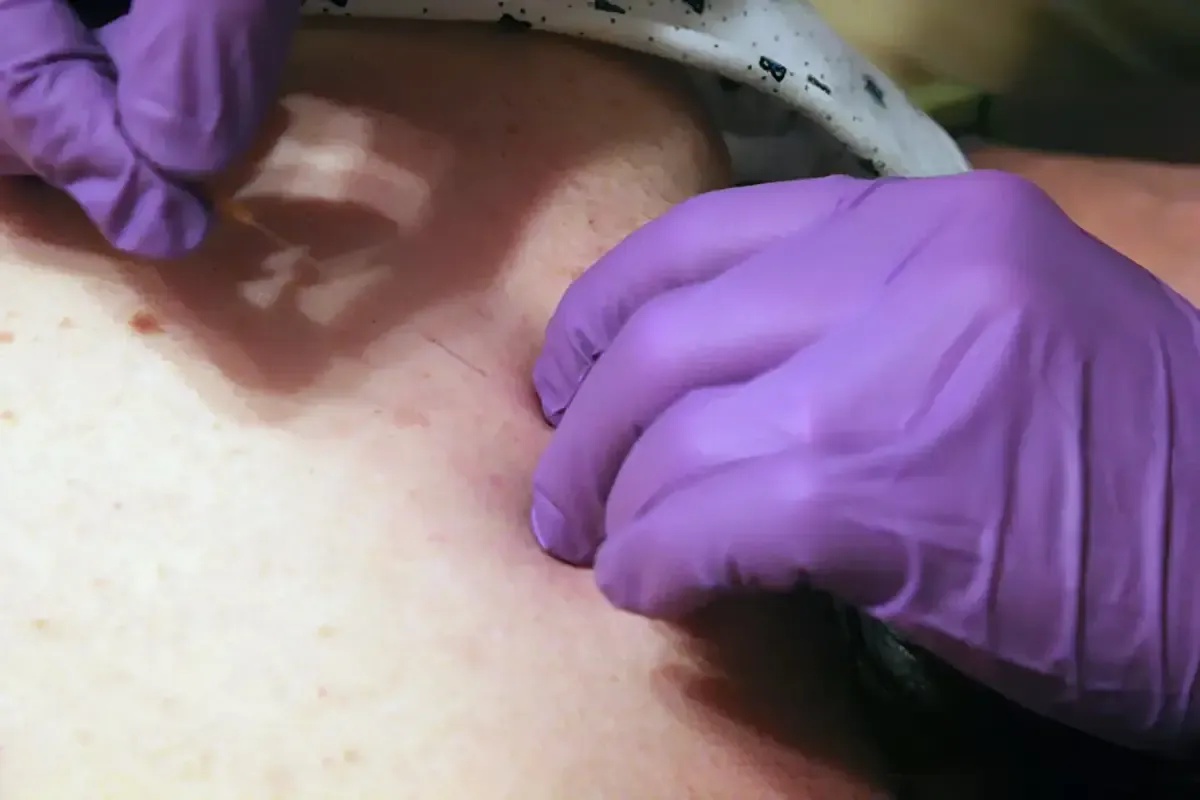
Dry needling is a precise, minimally invasive technique where a thin filament needle targets the tight knots and tender points deep inside a muscle that are driving your pain. Unlike acupuncture, which works on traditional meridian systems, dry needling is grounded in modern anatomy and physiology. The needle triggers the muscle's natural release response, which lets go of the guarding and the chemical irritants that keep the tissue locked up. Patients often report a twitch, a brief ache, or a sensation of relief as the muscle releases. Nothing is injected. The needle is solid and far thinner than the one used to draw blood, which is why the sensation surprises most people. Dry needling pairs well with the rest of your physical therapy, because quieting an angry muscle is what makes room for the strength and movement work that actually holds. It treats the tissue that is causing the problem instead of the area that happens to hurt.
The goal is never pain for pain's sake. Your therapist inserts the needle into the trigger point, and the muscle's own reflex does the actual release. This is why assessment comes first and why placement matters so much. A well-placed needle can interrupt a pain cycle that months of stretching and massage could not. That is also why the technique should only be performed by a therapist trained specifically in it. Here, dry needling is performed by Dr. Adam Burns, DPT, CPT, CMTPT, who is dry needling certified, and it is available at both of our Kansas locations: 103 NW 15th St in Abilene and 1030 N Marshall St, Suite B in Chapman. It is always one part of a plan, never the whole plan.
Who it's for.
Dry needling works best for muscle pain that has not budged with rest, stretching, or massage. If you have tight knots that limit your movement or fuel your pain, this technique may be exactly what you need. Kansas direct access means most patients start without a physician referral, and where a plan still requires one we check yours before your first visit.
Muscle knots that limit your range
You have tight spots that pinch your movement and send pain down your arm or leg. Dry needling can release what stretching and therapy alone have not touched, clearing the way for real movement gains. Once the knot lets go, the exercises you have been doing all along finally start to take hold.
Pain that keeps returning after treatment
Your pain quiets down, then comes roaring back. Deep muscle tension is often the culprit. Dry needling targets those stubborn knots so the relief lasts and the underlying cause does not circle back. It is often the missing step for people who feel like they have tried everything else.
Chronic muscle tension in specific spots
You know exactly where it hurts. Maybe it is your neck, your shoulder, or the side of your hip. Dry needling goes directly to the tight point and resets it so you can move freely again without constant tension. For tension that has settled into one specific area for months, this direct approach often works faster than broader techniques.
What to expect in a session.
Dry needling is focused work, and it happens inside your regular one on one appointment with your therapist, not as a rushed add-on handed to someone else. We measure what the muscle can do before and after, then re-measure at your next visit and tell you honestly what changed. Here is how it works from start to finish.
Assessment and positioning
Your therapist palpates the muscle to find the trigger point, then positions you so the area is easy to reach and you are comfortable. You will know exactly what to expect before the needle goes in. Your therapist will walk you through the sensation ahead of time so nothing feels like a surprise.
Insertion and release
A thin filament needle enters the trigger point. You may feel a twitch, a deep ache, or a sudden release. The needle stays in briefly while the muscle resets. This is the therapeutic part. That twitch response is actually a good sign, it means the needle has found exactly what it was looking for.
Post-treatment and movement
The needle comes out, and you stand and move right away, because what the muscle does under load is the point. Many people notice a change in how the area moves before they leave. Some soreness the day after is normal. Light movement and staying hydrated help the muscle settle.
Here is the honest version of what it feels like. Most people brace for a sharp sting and get a deep ache or a quick involuntary twitch instead. That twitch is the muscle letting go, not something going wrong. The needle is a thin solid filament and nothing is injected, so there is no medication and no burning. We screen you for suitability before we start, which is why we ask about pregnancy, blood thinners, bleeding disorders, a pacemaker, and needle anxiety. None of those automatically rule you out, but your therapist needs to know so the approach can be adapted or a different technique used. Afterwards, expect the treated area to feel sore for a day, roughly the way it does after a hard workout. That is normal, and it settles. Anything that does not feel right is worth a call to (785) 263-3646.
Everyone was knowledgeable, nice and helpful. I would recommend them.
Where to go next.
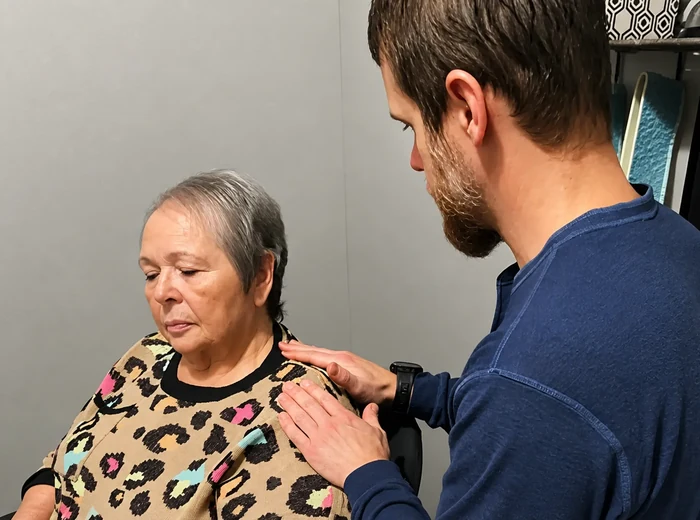
Manual Therapy
Hands-on techniques to release tension and restore movement where you need it most.
Manual Therapy
Deep tissue release to break up restriction and restore full range of motion throughout your body.

Chronic Pain
Evidence-based strategies to break the cycle of constant pain and get your life back.