Shoulder Pain Treatment in Abilene
Reaching overhead or sleeping on that side has become painful. If your shoulder pain is limiting what you can do, one evaluation opens the door to full mobility again.
What causes shoulder pain?
The shoulder is the most mobile joint in your body, which means it depends heavily on muscle strength and control to stay stable. When the rotator cuff muscles weaken, the surrounding muscles tighten, or your posture tips the joint out of alignment, pain follows. Understanding what has changed in your shoulder mechanics is the key to relief that lasts. Shoulders also tend to be the thing people wait longest on. They stop sleeping on that side, they stop reaching into the top cupboard, and they call it getting older. It usually is not.

The rotator cuff is a group of four small muscles that stabilize your shoulder. They can be strained from overuse or torn from an injury or fall. Pain with overhead movement or lying on that side is the telltale sign. Some small tears heal well with the right movement and strengthening. Larger tears may need more intervention, but building strength around the injury helps either way.
Frozen shoulder is stiffness that comes on gradually and limits your range of motion. It often follows an injury or period of immobility. The connective tissue around the shoulder tightens down, making movement painful and restricted. Physical therapy breaks up that stiffness and restores movement through gentle stretching and mobilization.
When the rotator cuff muscles are weak or fatigued, the head of the humerus shifts upward slightly, pinching the tendons and bursa underneath. This impingement causes sharp pain with overhead reaching. Opening up the space and strengthening the muscles that control the joint is the fix.
The acromioclavicular joint sits at the top of your shoulder. Arthritis, sprains, or misalignment can cause pain, especially with overhead movement or across-the-body reaches. Improving the mechanics of the shoulder often reduces or eliminates AC joint pain without needing advanced treatment.
Spending hours at a desk with rounded shoulders or doing repetitive overhead work loads the rotator cuff without adequate recovery. The muscles fatigue and tighten. Over time they strain or tear. Improving your posture and how you load your shoulder prevents injury and stops existing pain from getting worse.
Your shoulder stability depends on muscles working in coordination. If some muscles are weak and others are overactive, the joint becomes unstable and painful. Rebalancing and strengthening these muscles restores stability and gets you back to pain-free movement.
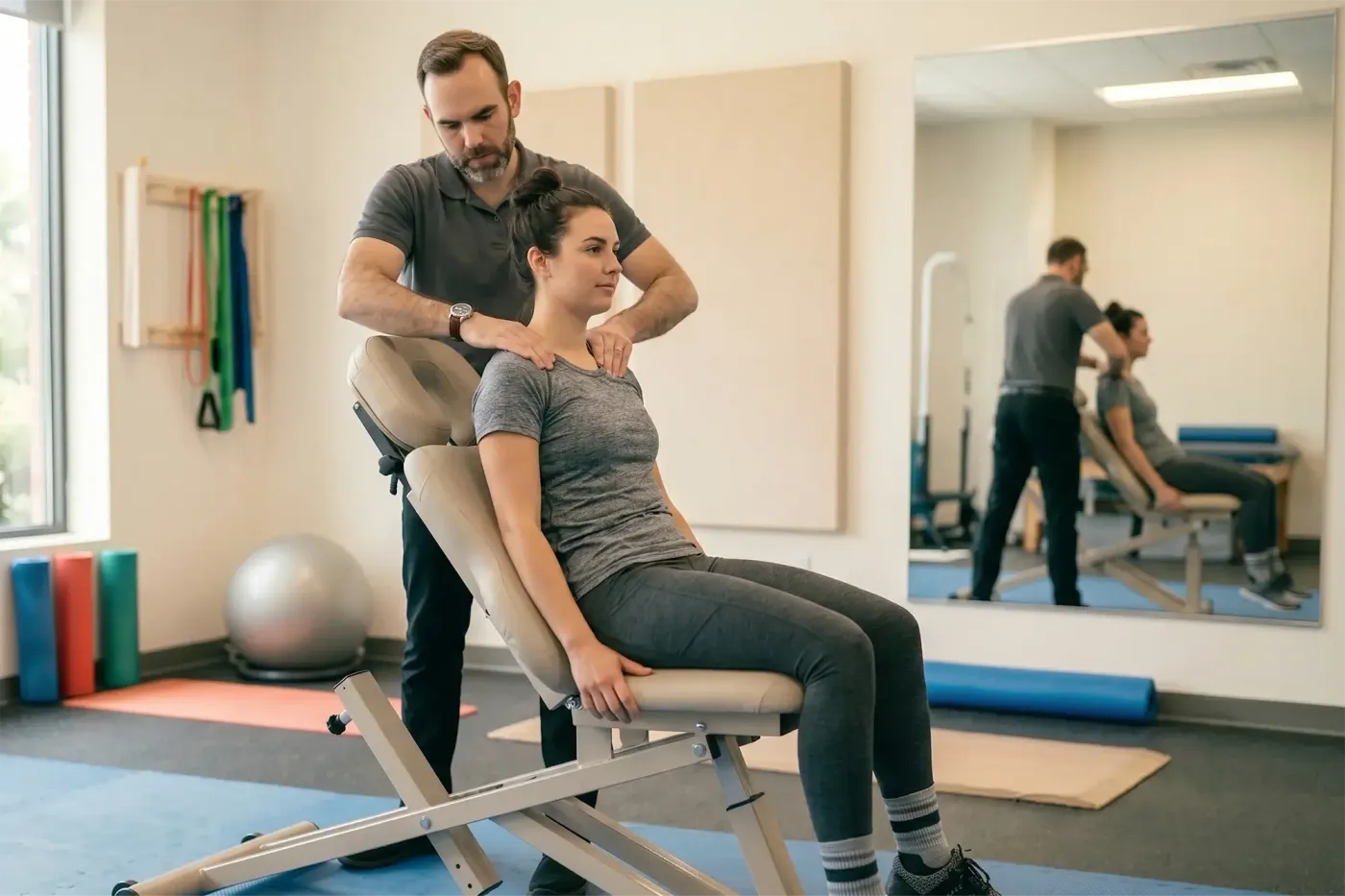
How physical therapy in Abilene helps.
We start by assessing your shoulder's movement, stability, and strength. We use hands-on techniques to release tight muscles and improve mobility. We address any movement restrictions in your shoulder blade and neck that are affecting how your shoulder works. Then we build strength and control in the rotator cuff and supporting muscles. We teach you how to move and exercise in a way that keeps your shoulder healthy. The goal is not just less pain. It is a shoulder strong enough to handle reaching, throwing, sleeping, and all the activities that matter to you.
A stiff shoulder and a weak shoulder need opposite things, which is why the hands-on part is not optional. Dr. Adam Burns, Tonya Mills and Angie Hoerner are ASTYM certified for cuff and capsule tissue that has stopped remodeling on its own, Adam is dry needling certified for the guarding that sets up around the shoulder blade, and Tonya carries additional training in manual therapy for the spine and ribs, which is where a lot of shoulder movement is actually lost. Every session is one on one with your therapist, start to finish. You are not handed to an aide and left on a pulley in the corner.
You almost certainly do not need a referral to start. Kansas direct access lets most patients be evaluated without one, and where a plan still requires one we verify it before your first visit and tell you exactly where you stand. We accept and file most plans, including Medicare, RR Medicare, Blue Cross and Blue Shield, Aetna Better Health KanCare, most network plans, Worker’s Compensation and auto insurance. If you do not see yours, call and we will check your benefits before you commit to anything.
What to expect from your recovery.
Assessment
We test your shoulder's range of motion, strength, and stability. We check how your shoulder blade moves and how your posture affects your shoulder. We look for what has changed in your mechanics. You leave with a clear understanding of what is causing your pain and how we will fix it, and with numbers on the chart that we re-measure as we go so progress is something you can see rather than something we claim.
Release and mobility
We use hands-on work to release tight muscles and restore normal shoulder movement. We improve mobility in your shoulder joint and shoulder blade. Pain decreases as the joint works better and compression is reduced.
Strengthening and stability
We rebuild the rotator cuff and supporting muscles. We teach you exercises that strengthen your shoulder without causing pain. We show you how to move, reach, and work in ways that protect your shoulder long-term.
Very compassionate and always right in time. Staff is very friendly even when you’ve got to push it a little further.
Pain rarely travels alone.

Elbow, Wrist & Hand Pain
Shoulder problems often affect how your arm and wrist work. Treating the whole chain restores full function.
Neck Pain
Pain that burns between the shoulder blades or refers down the arm often starts in the neck, not the shoulder itself.

Sports Injuries
Shoulder injuries are common in throwing and overhead sports. Real recovery means strength and control that lasts.