Pediatric Therapy in Abilene
You were told to wait and see, and you have been waiting, and your child is still working harder than they should have to for something that comes easily to other kids.
What is pediatric therapy?
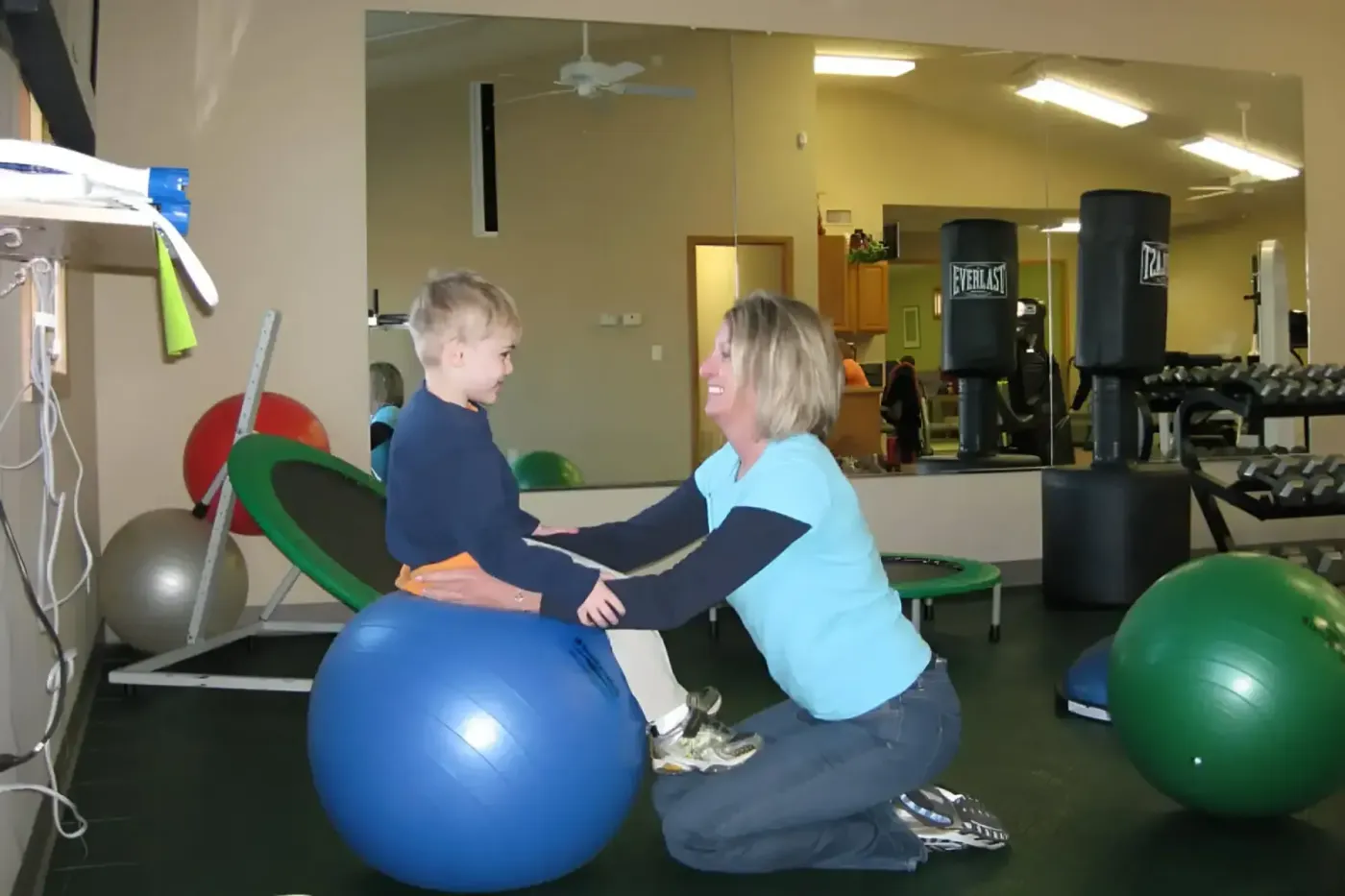
Pediatric therapy is physical therapy built for bodies that are still growing. It covers infants who are not hitting motor milestones, babies who hold their head turned to one side, toddlers who walk on their toes, school-age kids whose coordination lags behind their friends, and teenagers who tore something in a season that mattered to them. It also covers children recovering from surgery and children living with neurological conditions that change how muscles fire and how balance develops. The evaluation looks at strength, range of motion, balance, walking pattern and the quality of the movement itself, not simply whether a milestone has technically been reached. From there your therapist builds a graded motor program, which is a plain way of saying the challenge goes up in small steps your child can actually clear. What your child experiences is a game. Crawling through a tunnel, standing on one leg to reach a sticker, hopping along a line taped to the floor. Underneath the game is a dose: a set number of repetitions, at a set difficulty, in a set position, chosen because it targets exactly what the evaluation found. Children work harder and stay with it longer when they are playing. Play is not a softened version of the treatment. It is what makes the treatment possible.
The other half of the work happens at your house. Your therapist coaches you through the same positions and the same cues they used in the clinic, so the tummy time, the stretch for a tight neck, or the balance game keeps going between visits. You stay in the room, you ask questions, and you leave with something you can actually do on a Tuesday night. You also get an honest read on progress. We measure where your child is at the start, re-measure as we go, and tell you what those measurements say rather than what you are hoping to hear.
Who it's for.
If your child is behind on milestones, tilting their head to one side, walking on their toes, falling more than the other kids, or coming back from an injury or surgery, an evaluation is worth the visit. In Kansas most families can start without a physician referral, and we check your specific plan before the first appointment.
Milestones that are not arriving
Rolling, sitting, crawling and walking show up across a range, not on a date, and sometimes waiting really is the right call. When it is not, waiting costs you time you cannot get back. An evaluation tells you which of the two you are looking at, and if there is a delay, your child leaves with a program aimed at the piece that is actually holding the milestone back.
Torticollis and toe walking
A baby who always turns their head the same direction, or a toddler whose heels rarely reach the floor, is usually working around tightness or a pattern that has quietly set in. Both respond well to gentle hands-on work, positioning and stretching, and both do best when they are caught early and carried on at home between visits.
Coordination, sport and getting back
The kid who trips over nothing. The young athlete whose knee gave out in the middle of a season. The child coming home in a brace after surgery, or working through a neurological condition. Each one needs strength rebuilt in the right order and confidence rebuilt alongside it, so they go back to the field, the playground or the gym floor moving like themselves.
What to expect in a session.
Nothing happens to your child before they understand what it is. The first visit is as much about your child deciding this room is safe as it is about measurement.
The history, and the warm-up
Your therapist asks about pregnancy, birth, milestones, injuries, surgeries and what you are seeing at home that worries you. Then they watch your child move. Walking, running, climbing, reaching, balancing. Most of it looks like your child simply exploring the gym, which is the point, because relaxed movement is the movement worth measuring.
The program, disguised as a game
Obstacle courses, balls, tunnels, animal walks, balance beams and stickers. Every station is chosen for a reason, and the difficulty sits just past where your child is comfortable so the work counts. Your therapist stays with your child one on one, start to finish. No child here is handed to an aide or left to work through a sheet alone.
Your turn, and the home plan
Before you leave, you practice the key positions and cues yourself while your therapist corrects your hands. You go home with a short plan that fits inside a normal day rather than adding a second job to it. At each follow-up we re-measure, show you what moved, and change the program to match what your child is ready for next.
Dress your child in clothes they can get on the floor in, and bring a favorite toy or comfort item if it helps them settle. A parent or guardian stays in the treatment area for the whole visit. If your child is having a rough day, tell us at the door and we will change the plan rather than push through it. Progress does not come from a bad session.
I have been going to this place for 20+ years and I have always, always been treated with respect, kindness, patience, and always made me feel comfortable!
Where to go next.

Physical Therapy
Real, one-on-one care that treats the cause of your pain and gets you back to moving.

Dry Needling
Precise trigger point release to quiet muscle knots and break pain cycles.
Back Pain & Sciatica
The most common reason people find us. We treat the cause, not the symptom.