IASTM in Abilene
You stretch it every day, it loosens for an hour, and by the next morning it is exactly as tight as it was.
What is IASTM?
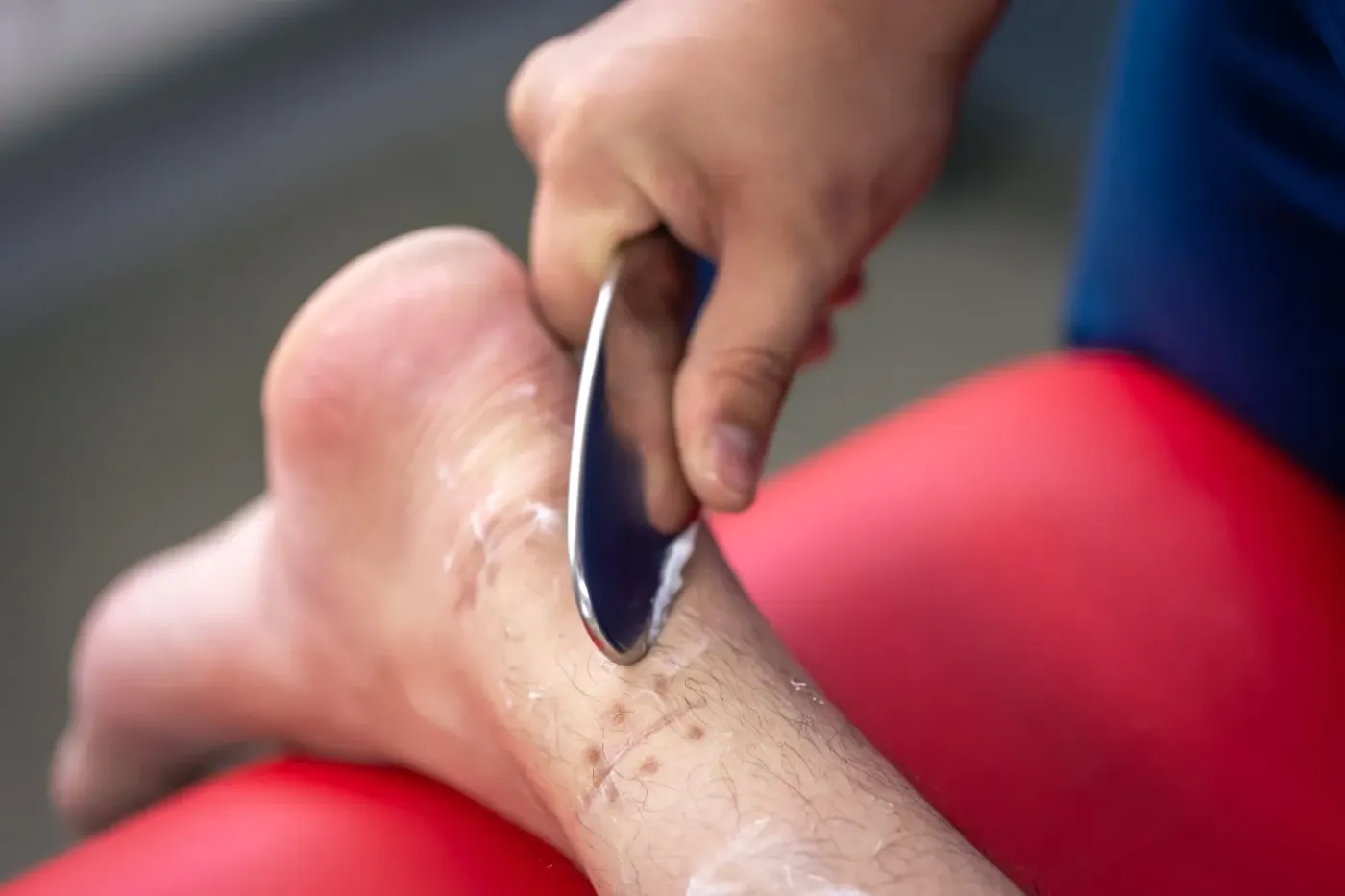
IASTM stands for instrument-assisted soft tissue mobilisation. Your therapist uses ergonomically shaped tools, usually stainless steel, along the skin over muscle, tendon and fascia to find and treat restriction. The reason for the instrument is not extra force. It is feedback. Restricted tissue, old scar, and layers that have stopped gliding over each other the way they should send a different signal back through a steel edge than healthy tissue does. Your therapist feels that through the tool, often more clearly than through fingertips, and can then work one specific spot rather than a whole general region. The shape of the tools also lets a therapist hold an angle and a depth that hands cannot sustain, which matters over places like the shin, the forearm, the plantar fascia and the outside of the thigh. The treatment draws blood flow and cell activity into tissue that has been quiet, and the layers start to slide again.
What IASTM is not is a massage, and it is not a gadget used on its own. The instrument work opens a window, and what happens inside that window decides whether the change holds. So it is followed in the same visit by stretching, by moving through the range you just gained, and by loading that range. Between visits, you keep using the area. IASTM also sits alongside ASTYM here, which is a specific certified system with its own protocol. Your therapist will tell you which one fits your problem and why, instead of defaulting to whichever tool is closest.
Who it's for.
IASTM suits the problems that feel stuck rather than injured. Tissue that has been tight for months, an old scar that never softened, a tendon that went from painful to simply unreliable.
Scar tissue and adhesions
An old surgical scar, a healed tear or a burn can bind together layers that are meant to glide past each other. It shows up as a range you cannot get past no matter how long you hold the stretch. Instrument work goes after the binding itself, so the tissue underneath is free to move again.
Chronic tightness that will not release
Calves, the outside of the thigh, forearms and the bottom of the foot are the usual suspects. You stretch, it feels better for an hour, it is back by morning. Instrument work addresses the reason the tissue keeps returning to that state instead of chasing the sensation it produces.
Tendon trouble and limited range
When a tendon has been irritable for months, the quality of the tissue is the problem and rest has stopped helping it. IASTM stimulates activity in that tissue and restores the glide around it, then loading rebuilds it. That combination is what gets both your range and your tolerance back.
What to expect in a session.
An IASTM session is assessment and treatment at the same time. The tool tells your therapist where the restriction is while it is treating it.
Warm it, then scan it
Your therapist checks the range and the strength that are limited, warms the area, then passes an instrument over it. Restricted tissue announces itself through the tool as a gritty, grainy feeling, and most people can feel it happening too. That is how the treatment area gets chosen rather than assumed.
Treating the restricted tissue
The instrument is worked along and across the affected tissue with a lubricant, at an angle and a pressure your therapist adjusts to what the tissue is doing under it. It is firm, and over a genuinely restricted spot it can feel raw. Say what you feel, because the pressure is set by your response.
Move it, then keep it
Straight afterward you take the area through the range you just gained and load it, because tissue reorganises around what you ask of it. You leave with a short home program and clear instructions for the days between visits. We re-measure the range and the strength as we go and show you what changed.
Mild redness over the treated area is normal and usually fades within hours. Small bruising can happen, and if it does we adjust the pressure. Wear clothing that lets your therapist reach the area. Tell us if you take blood thinners, have a skin condition or an open area over the site, or are managing anything that affects healing, and we will tell you honestly whether instrument work is right for you.
The staff at Abilene Physical Therapy and Sports Rehab are hands down the best! Taci and Angie are incredibly knowledgeable, thorough, and exceptional at what they do.
Where to go next.
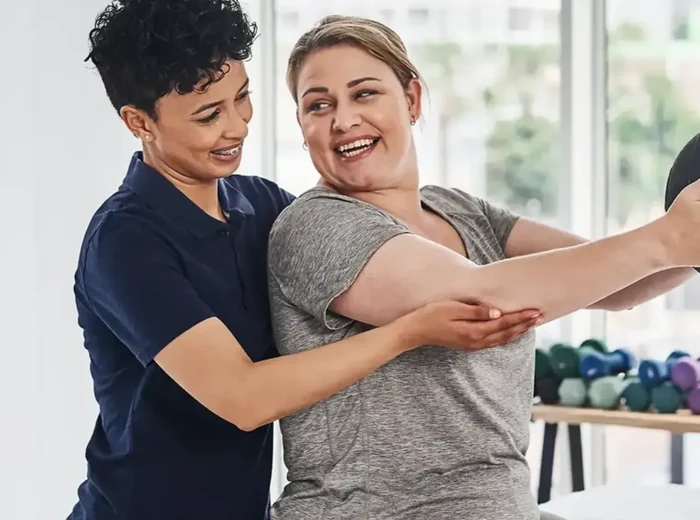
Physical Therapy
Real, one-on-one care that treats the cause of your pain and gets you back to moving.
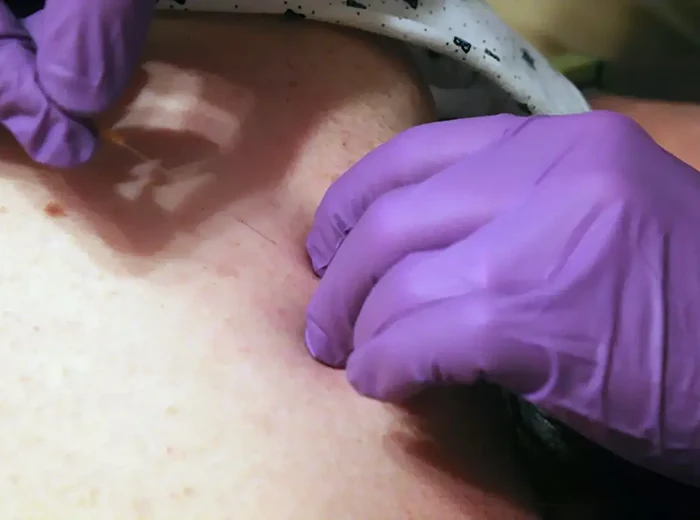
Dry Needling
Precise trigger point release to quiet muscle knots and break pain cycles.
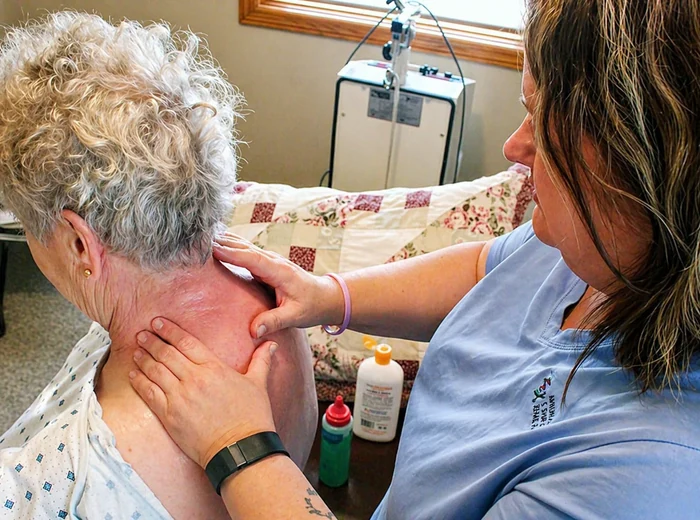
Back Pain & Sciatica
The most common reason people find us. We treat the cause, not the symptom.