Balance Therapy in Abilene
You have started watching the floor when you walk, and you have quietly stopped doing a few things you used to do without thinking.
What is balance therapy?
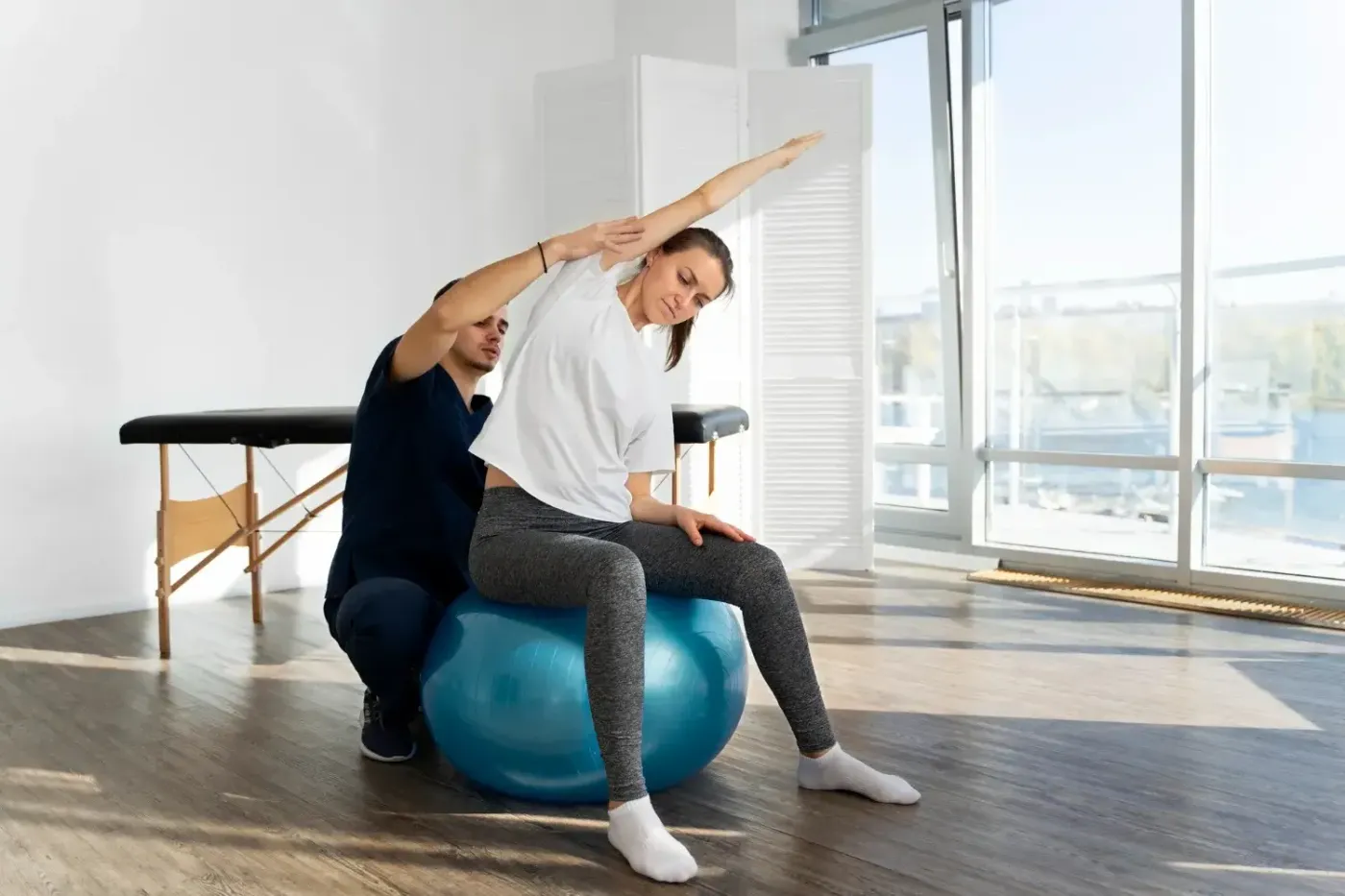
Balance is not one skill. It is three systems reporting to your brain at the same time: your eyes telling you where you are in the room, your inner ear sensing the position and motion of your head, and the sensation in your feet and joints telling you what is underneath you. Your brain compares all three, decides what is true, and sends a correction to your hips and ankles before you consciously notice anything at all. Balance therapy starts by working out which part of that chain has gone quiet. It might be vision, an inner ear problem, neuropathy that has dulled the feeling in your feet, weak hips, slow ankles, or a reaction time that is now a half step behind where it used to be. Each of those has a different fix, and treating the wrong one is the reason generic exercise sheets almost never make anyone steadier.
Once your therapist knows which system is underperforming, the retraining gets specific. We lean on the systems that still work, challenge the one that is failing so it has a reason to sharpen up, and rebuild the hip and ankle strength that turns a stumble into a step instead of a fall. Gait training comes with it, because how you cross a room is the real test. So does an honest look at your home: the rug edge, the step without a rail, the dark hallway, the chair that is too low to stand out of cleanly.
Who it's for.
Balance therapy is for anyone who has felt the floor become something to think about. You do not have to have fallen yet. Catching it before the first fall is the entire point.
Unsteadiness and fall risk
You reach for the counter more than you used to, turning quickly makes you plant your feet, and stairs now get your full attention. Those are early signals, not a verdict. We measure where your balance actually is, retrain the system that is lagging, and rebuild the strength that catches you.
After a stroke, or with neuropathy
When one side is weaker or your feet cannot feel the ground clearly, your brain is steering on incomplete information. Training leans on what still reports well, sharpens what does not, and rebuilds a walking pattern you can trust instead of one you have to concentrate on every single step.
Age related decline you have noticed
Reaction time, ankle strength and confidence all fade quietly, and most people adapt by doing less until the world gets small. That trade is reversible. Loading the balance systems on purpose is one of the few things that puts the range of your life back where it was.
What to expect in a session.
Your first visit is measurement, not exercise. Nobody should hand you a balance drill before they know which system is actually letting you down.
Testing what is actually failing
Your therapist checks your vision and eye movement, screens the inner ear, tests sensation in your feet, measures hip and ankle strength, and watches you walk, turn and change surface. Standardised balance tests give us a starting number, so progress later is something we can show you rather than something we claim.
Retraining under real conditions
Then we challenge whichever system is behind. Narrow stances, head turns while walking, uneven surfaces, changing direction, reaching outside your base. Every bit of it is graded to be hard enough to force an adaptation and safe enough that you are never actually at risk, with your therapist beside you start to finish.
Walking, home and follow-through
Gait training takes the work out of a static stance and into the way you really move. We go through your own home situation, the stairs, the rugs, the lighting, the chair heights, and build a home program you will genuinely do. We re-measure as we go and tell you honestly what the numbers say.
Wear the shoes you actually walk in day to day, not your best pair, because we need to see the real thing. Bring a list of your medications, since several common ones affect balance and blood pressure and it changes what we look for. If you use a cane or a walker, bring it, even if you feel you have outgrown it. And you can usually start without a physician referral in Kansas. We check your plan first and tell you where you stand.
My experience with Abilene Physical Therapy and Sports Rehab has ALWAYS been positive. Caring, friendly staff, helped me with exercises at home in addition to the excellent therapy
Where to go next.

Physical Therapy
Real, one-on-one care that treats the cause of your pain and gets you back to moving.

Dry Needling
Precise trigger point release to quiet muscle knots and break pain cycles.
Back Pain & Sciatica
The most common reason people find us. We treat the cause, not the symptom.